



No items

Description
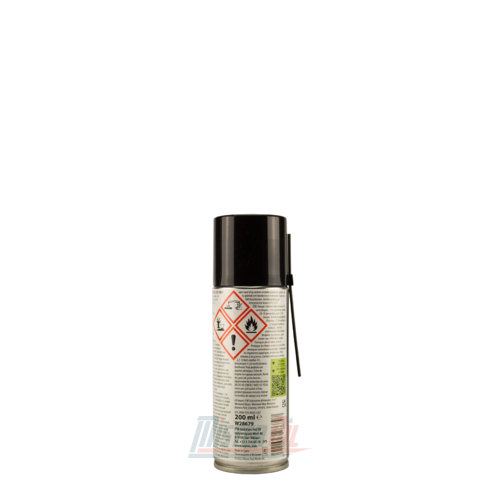
Wynn’s Turbo Cleaner (28679) cleans and unblocks dirty turbochargers. When spraying, it produces a foam, which has a long lasting cleaning effect on the surface of the turbo.
Applications
- For all diesel and petrol turbo engines.
Features And Benefits
- Cleans and unblocks dirty turbocharger geometry with or without dismantling.
- Dissolves gum, lacquer, tar, carbon and varnish.
- Restores turbo power to its original activity.
- Regains optimal air/fuel ratio.
- Harmless to exhaust gas after-treatment systems.
Usage Advice
A. Cleaning the turbo (inlet side) without disassembly.
- Start the engine and let it warm up.
- Remove the flexible hose in the intake system, located between the air filter box and turbocharger / intercooler.
- For petrol engines run the engine up to 2000 rpm.
- For diesel engines let the engine idle, NEVER throttle.
- With a warm engine, spray the product into the inlet side of the turbo.
- Spray Wynn’s Turbo Cleaner in short intervals to avoid a spontaneous increase of rpm and engine knock.
- After each spraying wait for the rpm to set back to the original level.
- If necessary, throttle for petrol engines to avoid stalling.
- For diesel engines NEVER throttle.
- Continue until the 200 ml product in the aerosol is used.
- Let the engine idle for a few minutes.
- Stop the engine.
- Reconnect the air-intake hose.
- Start engine, throttle the engine 5 to 10 times (maximum 3000 rpm), or drive 5 to 10 km with the car (do not exceed 3000 rpm).
- Let the engine run at least another minute before stopping.
B. Cleaning a very dirty turbo (inlet and outlet side) with disassembly
- Disassemble the turbocharger.
- Remove the turbo in such a way that the variable geometry is visible.
- Spray all parts well.
- Allow the product to soak several minutes.
- Spray again on the parts until all dirt is removed.
- It may help to use a rag or a piece of tissue to remove the dirt.
- Dry the parts with compressed air, rag or tissue.
- Check visually for mechanical defects.
- Mount the turbo, with new gaskets.
Health and Environment
- H222 - Extremely flammable aerosol.
- H229 - Pressurised container: May burst if heated.
- H315 - Causes skin irritation.
- H318 - Causes serious eye damage.
- H336 - May cause drowsiness or dizziness.
- H411 - Toxic to aquatic life with long lasting effects.
- P261 - Avoid breathing vapours, spray.
- P280 - Wear protective gloves, eye protection.
- P305+P351+P338 - IF IN EYES: Rinse cautiously with water for several minutes. Remove contact lenses, if present and easy to do. Continue rinsing.
- P310 - Immediately call a POISON CENTER or doctor/physician.
- P102 - Keep out of reach of children.
- P210 - Keep away from hot surfaces, open flames, sparks, heat. – No smoking.
- P211 - Do not spray on an open flame or other ignition source.
- P251 - Pressurized container: Do not pierce or burn, even after use.
- P410+P412 - Protect from sunlight. Do not expose to temperatures exceeding 50°C/122°F.
- EUH208 - Contains 1-(N,N-Diethanolaminomethyl)-5-methylbenzotriazole, 1-(N,NDiethanolaminomethyl)-4-methylbenzotriazole. May produce an allergic reaction.

